Flying ColoursResources
Think deaf and hard of hearing kids can’t enjoy music? Think again! In fact, taking part in musical activities can help DHH kids have fun, learn, and thrive.
Music is a fun and important part of childhood. But what if your child is deaf or hard of hearing (DHH)? Will they ever enjoy the soothing sound of a lullaby or jumping around in time with an upbeat song? Contrary to a popular stereotype, DHH kids can experience music – and benefit significantly from having it in their lives.
Good vibrations: how we are wired for music
Many DHH children (and adults) love music. Unlike speech sounds, we don’t have to understand or hear all musical sounds to enjoy them. Music is made up of different sound vibrations, including high and low-pitched sounds. Music can also be fast or slow; loud or soft. These differences make it interesting.
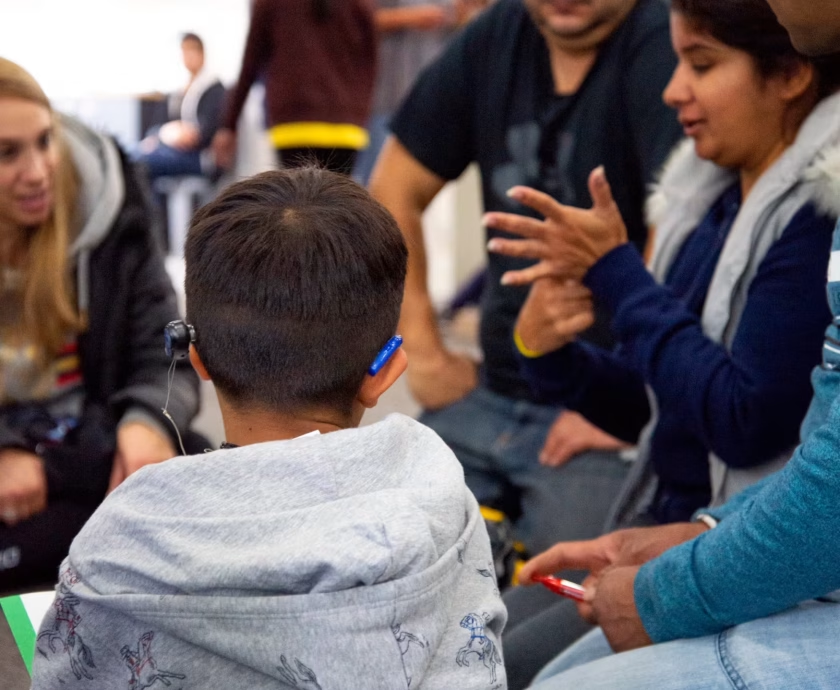
Some DHH kids have enough hearing to enjoy music through their ears. An assistive listening device can help them to hear it better. Others say they ‘feel’ the music vibrations in their bodies.
Music can support your child’s development
For DHH kids, access to music is not just enjoyable – it can promote healthy development. Early opportunities to listen and take part in family music activities can support your baby’s ability to hear if they use hearing aids or cochlear implants.
Research has shown that music training can help DHH kids hear better in noisy environments. It improves perception of rhythm, stress and tone in language. Plus, music training can improve communication skills, emotional regulation and peer relationships. It can also promote better mood and reduce symptoms of anxiety, depression, and low energy.
Enjoying music with your baby
Here are some ways you can bring music into your DHH baby’s life.
- Sing lullabies – babies love it when you sing to them. Hold your baby close to your chest and mouth so they can hear you and feel the vibrations.
- Chant nursery rhymes – get close to your baby and sing or chant your favourite nursery rhymes.
- Listen to music together – search up videos you can sing along with. Some even have movements you can follow and learn together.
- Move to the music – hold your baby in your arms or by the hands and move together in time to the beat.
Enjoying music with your toddler or child
Here are some ways you can bring music into your DHH toddler or child’s life.
- Learn a musical instrument – with the right support, DHH kids can learn and play music.
- Watch, sing, and dance to music videos.
- Try singing lessons or a choir.
- Have family singalong nights.
- Join a band.
Remember, music should be fun. You can experiment until you find an activity your child enjoys.
Mind the loudness level
It is important to note that excessively loud sounds can cause injury. While your child might need the loudness dialled up a little to hear better, you don’t want to risk damaging their hearing system.
Be sure to stay within the safe volume limits on devices such as headphones and ear buds. You can monitor loudness levels using various smartphone apps. Your child’s audiologist can give you more information about hearing safety and devices tailored to your child’s hearing needs.