Flying ColoursUnderstanding Deafness
Let’s face it—school is a big part of life for kids and young people. You’ll want to find one where your child can flourish and be happy. Here’s some tips for choosing a school that’s a good fit for your child and family.
What types of school could my child who is deaf or hard of hearing go to?
Australia has a range of schooling options to choose from. Common ones include:
1. Mainstream school
Your child could go to a typical local primary or high school and attend lessons with their peers. You could arrange extra support if needed, such as from a visiting teacher of the deaf. Government, Catholic and independent schools can all support children who are deaf or hard of hearing.
2. Mainstream school with a specialist unit
Some mainstream schools have a specialist unit or classroom that has been adapted for teaching deaf and hard of hearing children. Your child may be taught just in this unit, or attend some mainstream classes and some in the specialist unit.
3. Schools for children who are deaf or hard of hearing
These schools take a bilingual-bicultural approach in which children usually learn Auslan as their first language and English as their second. The aim is for children to achieve proficiency in both languages and to foster socialisation among both the deaf and hearing communities.
4. Specialist schools for children who are deaf or hard of hearing
These schools have specialist staff, equipment and teaching strategies to support children who are deaf and have a disability or other educational needs.
Choosing a school
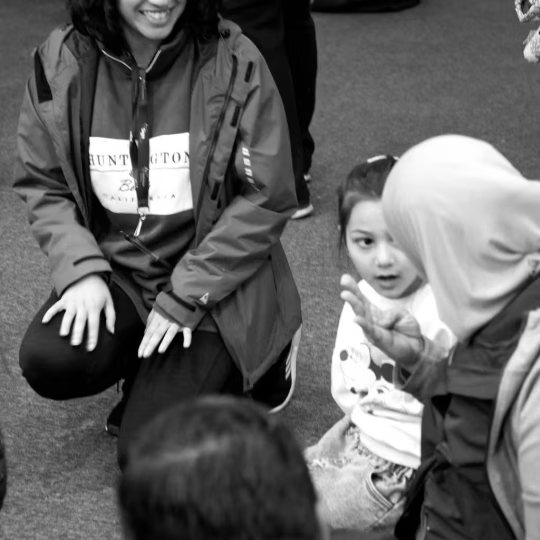
It’s understandable that finding the right school can seem overwhelming. Whatever you decide, you’ll want to know your child’s needs are being met. It can help to start by making a list of possible schools in your area, then arranging a visit to see how you feel about each of them.
A few questions to consider include:
- Do we feel welcome at the school?
- Is their teaching program suited to my child’s age and ability level?
- What support options and/or equipment are available?
- What policies do they have to ensure student wellbeing?
- How do they meet special educational needs?
- What’s their approach to teaching children who are deaf or hard of hearing?
- How will my child get to school and how convenient is it?
- Will my child have access to visiting professionals such as speech-language pathologists?
It’s important to know that choosing a school doesn’t lock you in for life! If things don’t work out like you’d hoped or your circumstances change, you can always find another one.
Transitioning to school
Starting ‘big’ school and transitioning into high school are big shifts in your child’s life, so they’re both exciting and a little unnerving! This anxiety can be heightened if your child is deaf or hard of hearing.
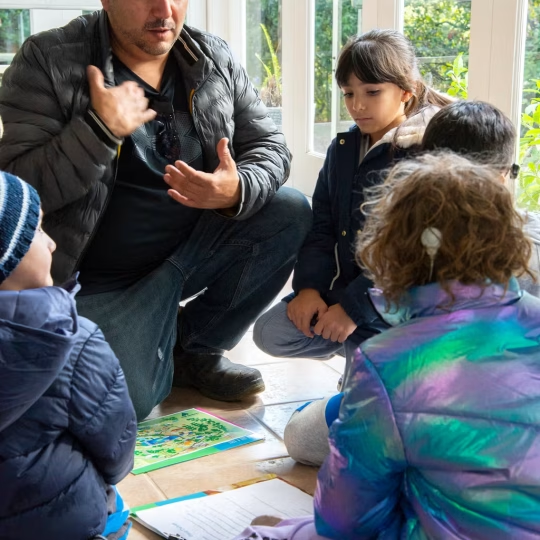
Successful school transition involves thoughtful planning, preparation and communication. Visiting the school beforehand and familiarising yourself and your child with the staff, layout and facilities is a great idea.
For children starting primary, think about ways to help them get comfortable with the idea of school. Talk to them about it or read stories about it. They could try on their uniform, or you could label their bag and lunchbox together.
Young people often worry about transitioning into high school. Focus on the positives, like the opportunity to meet new people and choose interesting subjects. Encourage your child that most people will be supportive, and things are usually not as scary as you anticipate.
Handy hints and resources for school choice and transition
You know your child better than anyone else and are a key part of their educational journey. Your views, experience and knowledge about your child matter.
Be a great role model. Children learn from watching their parents. Taking a positive attitude towards their deafness will help them feel more confident about school.
Encourage your child to find their passions and like-minded friends by trying hobbies and activities outside of school. Some examples include sports teams, music groups, drama, chess, debating, and dance, as well as support groups for kids who are deaf and hard of hearing.
Talk to other families who have kids at the school you’re considering and ask what they like and dislike about it. Ask local families for school recommendations.
When you visit schools, take a list of questions and a checklist of things you’re looking for with you.
Take photos of the school’s facilities on your device to remind you of what each school had when you get home.
Visit your state or territory government’s education department website to find out more about schools in your area.
At the start of each school year, meet with your child’s school to craft a plan to meet their needs. Enlisting the support of your audiologist can help with this.
Helpful links and resources:
- Schooling options | Raising Children Network
- Starting school checklist | Aussie Deaf Kids
- Choosing your child’s school | Aussie Deaf Kids
- Choosing primary schools – children with a disability | Raising Children Network
- Transition to primary school | VDEI
- Transition to high school | VDEI
- Disability and education: state agencies | Raising Children Network
- Schools online | Department of Education Western Australia