Updated: 6th December 2021
We are seeking Expressions of Interest for Casual Auslan Tutors who wish to join our dedicated team, you can read the position description here.
About DCA
Deaf Children Australia’s (DCA’s) purpose is to remove barriers to the personal development and social exclusion faced by children and young people who are deaf or hard of hearing (D/HoH). Our mission is to inspire and empower D/HoH children and young people to reach their full potential. In achieving DCA’s vital work, our organisation, staff, and volunteers uphold the following values; Respectful, Accountable, Cooperative, and Committed to Service.
About this role
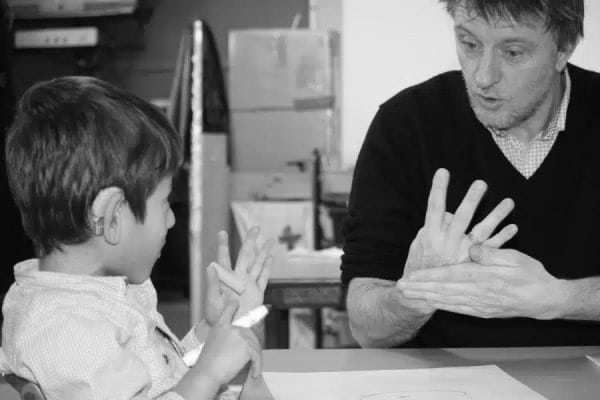
As a DCA Auslan Tutor, you will provide individualised Auslan tuition to support, develop and enhance Auslan language skills at all levels to deaf and hard of hearing people and their families. Auslan tuition can be delivered in a variety of community and home-based situations, both one-to-one, family and group settings. The role may include teaching Auslan language skills to people from varied language and cultural backgrounds, in addition to teaching in various workplace settings to co-workers where people who are deaf and hard of hearing are employed. In addition to session delivery during business hours, Auslan Tutors must be prepared to deliver tuition after hours and during weekends as negotiated.
Benefits in Working with DCA
A career with Deaf Children Australia will offer you rewarding experiences to make a difference to the lives of people in our community who are deaf or hard of hearing. We have a high energy and supportive culture guided by our values.
About you
To be successful in this role you will need to demonstrate your ability to meet the Selection Criteria outlined below:
- Fluency in Auslan (essential);
- Diploma of Auslan (desirable);
- Experience in Teaching/Tutoring Auslan (desirable);
- Highly developed written communication and interpersonal skills
- Demonstrated ability to assess participant needs, develop, monitor, review and implement relevant programs and to measure participant performance against agreed objectives
- Excellent customer service skills with commitment to ensuring a positive, professional customer experience
- Strong capacity to work autonomously
- Strong time management and organisational skills with ability to plan work effectively while demonstrating flexibility to meet individual needs
- Capacity to facilitate and engage in group service delivery, including workshops and presentations
- Proven experience in record keeping including an ability to maintain confidential information and maintain program paperwork
- Ability to act as a Deaf role model for participants and their families
- Sound values that reflect DCA’s mission and vision
- Current driver’s licence and ability to utilise own vehicle
- Demonstrated physical capability to perform job requirements
- Strong understanding, knowledge and experience of the Deaf community and culture
Deaf Children Australia is a Child Safe organisation. Accordingly, the successful candidate will need to be willing to undertake the following checks and clearances;
- Working with Children Check
- Police Check (International Police Check if applicable)
- Disability Workers Exclusion Scheme Check
Deaf Children Australia welcomes diversity in all its forms and greatly encourages applications from Aboriginal and Torres Strait Islander candidates.
Candidates who are available to work after school hours and weekends are encouraged to apply.
To express interest in this position, please email your Resume and Cover Letter to: jobs@deafchildren.org.au (please include position title in email subject line)
Please note, we reserve the right to close or extend this advertisement depending on the number and quality of applications received. Therefore, we urge all suitable candidates to submit their application as early as possible.