Just found out your child is deaf or hard of hearing? You're not alone, explore simple guides for early steps, hearing tests, communication options, and the people who can support your family.
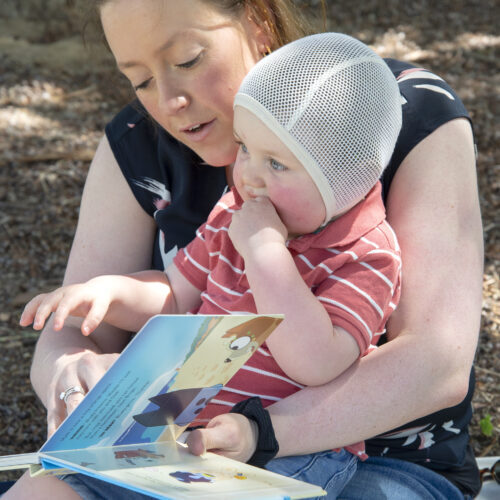
Karla’s son Ollie was born in December 2012. He first failed his Newborn Screen at 4 days old, and was later diagnosed with Moderate and Moderate-Severe Bilateral Sensorineural Hearing Loss.
“We of course then became caught up in the whirlwind of appointments,” Karla said. “I found juggling the seemingly never-ending list of appointments exhausting – Ear, Nose and Throat Specialists, Audiologists, Paediatricians. It was such a bombardment of information, I just found it far too much to deal with all at once.”
Attending an Early Childhood Development Program helped Karla and her family discover the stories of other families with deaf and hard of hearing children.
“I had no idea what to expect or what the future held but I knew I had to give it a go,” Karla said. “I consider ourselves incredibly blessed that Ollie has had these opportunities. He is now thriving, well engaged, and tenacious – he knows exactly what he wants and how he is going to make it happen.”
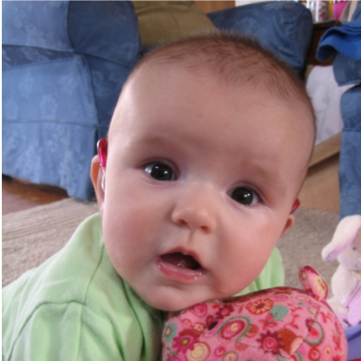
When Emma’s daughter Darcy was born, she had no risk factors for deafness. A referral to the Victorian Infant Hearing Screening Program later found that Darcy had profound bilateral hearing loss.
“Some people responded with how sorry they were to hear it, and some were slightly taken aback by our response, which is always, but she’s only deaf!”
Emma embraced a bilingual approach to language, introducing Darcy to both English and Auslan with the support of the Early Intervention Service. Darcy is now an especially talkative young girl.
“It was really important that we were very comfortable with our decisions, and able to be assertive in our choices. Every decision we have made has been done with the belief that it will improve an outcome for her, and allow her to be a complete child who is funny, wilful, stubborn, independent, slightly dirt-encrusted and happy.”
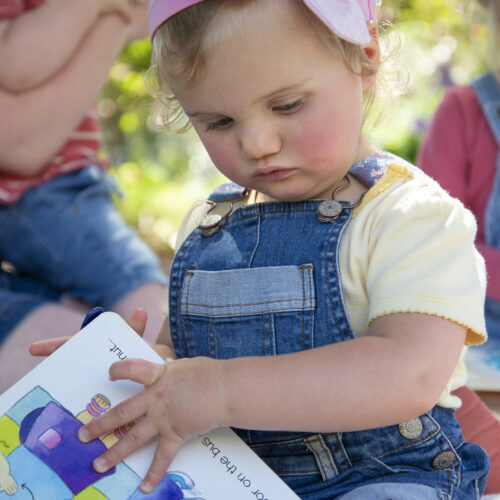
Stacey is a Parent Mentor for Deaf Children Australia. Her daughter Grace is a twin, and one of three children.
“At 2 years we noticed something was wrong. Grace was not talking, making noises, or interacting with anyone – she was generally living in her own little world. However, parental instinct is a strong thing, and after pushing and pushing, our daughter was given a hearing test.”
Grace was diagnosed with moderate to severe bilateral hearing loss. “It’s hard to explain, but there was a slight feeling of relief, to have our suspicions confirmed. But more overwhelmingly, we felt great sadness, guilt, and fear.”
“Now, I feel more confident that Grace will be okay. She continually amazes me with her progress and her beautiful happy nature. Her joyful personality only draws people toward her, and everyone who meets Grace loves her.”