Learn Auslan with our cute and adventurous Platypus friends and their besties, Pip and Annie, plus Froopies, Weggies, Matcheroo cards and more.

The Platypus Playhouse range of learning tools is designed to help build Auslan skills for your child, your family, carers and friends.
Pip and Annie, their Besties, plus Froopies and Weggies, Matcheroo cards and more will facilitate playful, engaging opportunities for your child to begin to communicate and develop basic contextual connections with you, siblings, carers, little friends and playmates.
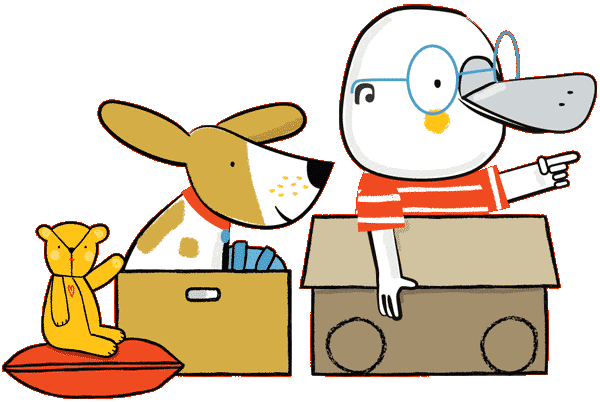
Learn Auslan with our cute and adventurous Platypus friends and their besties.
We have created Auslan translations of all our storybooks for you to enjoy right here. Have fun learning by clicking the button below. Auslan is for everyone!
Our team has produced a Guidebook to help you make the most of your products in the Platypus Playhouse range! This Guidebook contains strategies for learning through play, in addition to fun activities and ideas for Auslan Learning Games. See below!
Over the last few decades, research has shown how a child's brain is geared up for learning. Children's brains grow rapidly from birth to eight years, making this the opportune time for developing brain pathways for learning.
Early experiences affect a child's learning outcomes and life opportunities in numerous ways, including:
Research and consultation with the Victorian Deaf Education Institute, Deaf interpreters, and Early Learning Educators, has informed the development of our Platypus Playhouse resources.
To help parents narrow their search for knowledge and information, we have curated a catalogue with recent scientific papers, all in plain English and all about deafness. Research is often very technical, using medical and academic terminology.
To start you off, we have provided some easy-to-read summaries of the benefits of learning Auslan through play.
When families and communities collaborate in positive ways, a deaf child's capacity to achieve their learning potential is significantly enhanced. This paper prepared by Dr Elizabeth Levesque highlights the important role parents and caregivers play in ensuring that their young deaf children are provided with the best opportunities to develop to their full potential and gain a strong identity.
Literacy is not just reading, but includes the skills and knowledge needed for thinking, comprehending and communicating. This article presents a model of how deaf and hard of hearing children's literacy development can be supported through their strengths, through sign language and various visual modes of learning.
With the right methods, it's possible to teach a baby as young as six months old to use a simple sign. This study involved two experiments in training infants to sign, building on research into the benefits of teaching signing to hearing babies before they have learned to speak.
This article authored by Dr Elizabeth Levesque describes Auslan, the primary language of the Australian Deaf community, and explains the stages babies and children go through in learning to sign fluently, from babbling on their hands from around four to seven months of age.
Parents can help improve their child's language development by providing rich language experiences led by their child's language preferences. This Australian study examined which factors contributed to the language outcomes of young deaf children whose hearing parents exposed them to English and Auslan early in their development.